Presenting a special guest post by journalist and friend Trudy Ring…
_______________________________
One hundred years ago, the great American novel was published.
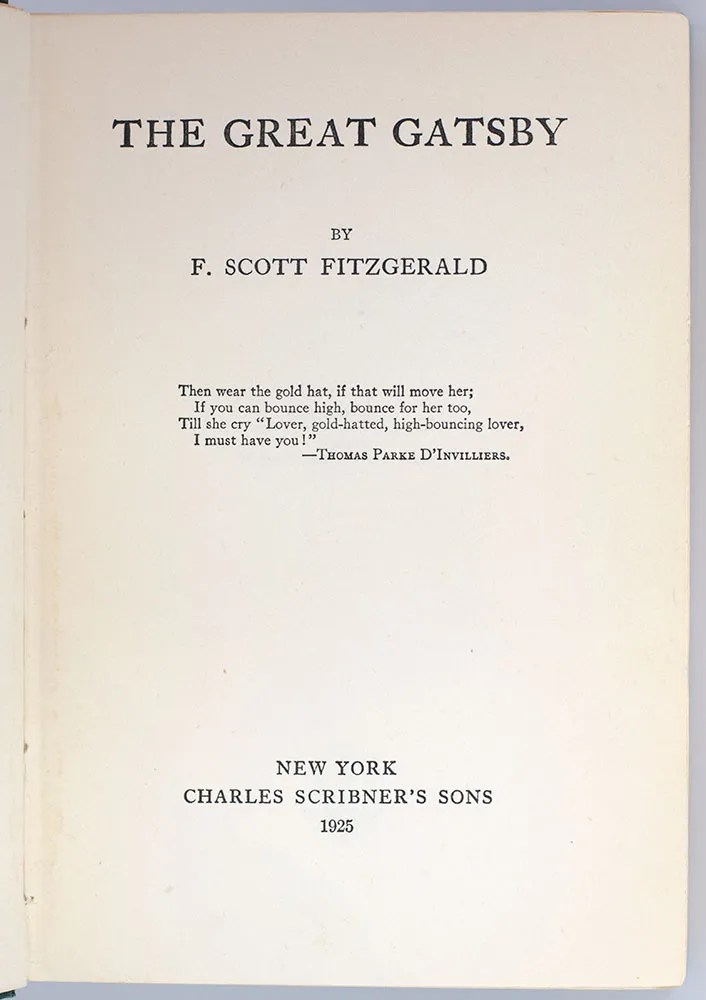
OK, there will never universal agreement on what is the great American novel, and many books have been considered for the title. But there are numerous critics, scholars, and readers who would choose F. Scott Fitzgerald’s The Great Gatsby, which came out April 10, 1925.
It wasn’t an instant success. A few early reviewers were enthusiastic, but most were less so, and sales were disappointing. Fitzgerald died in 1940 thinking himself a failure. But there was a revival of interest in him and his best novel at mid-century, thanks to an Armed Forces Edition of Gatsby distributed to soldiers in World War II, then postwar biographies and scholarly studies of Fitzgerald. By now, it’s been read by millions, whether for a college or high school class or just for pleasure, and has been the subject of innumerable scholarly studies.
And then there are the adaptations — for film, stage, and television. For my money, the best is the 1974 film starring Robert Redford as Gatsby, written by Francis Ford Coppola, and directed by Jack Clayton. After being hyped enormously, it didn’t get a lot of critical or audience love upon its release. But here I’ll lay out why I consider it the greatest Gatsby adaptation.
A faithful version, beautifully cast
For the uninitiated, a quick recap of the story: In 1922, Nick Carraway, a young upper-middle-class Minnesotan, is restless after serving in what was then called the Great War, so he moves east to work on Wall Street. He rents a cottage on Long Island, next door to an ostentatious mansion occupied by an enigmatic millionaire, Jay Gatsby, who gives extravagant parties that draw attendees from all over New York City and its environs. “People were not invited—they went there,” says Nick, the narrator.
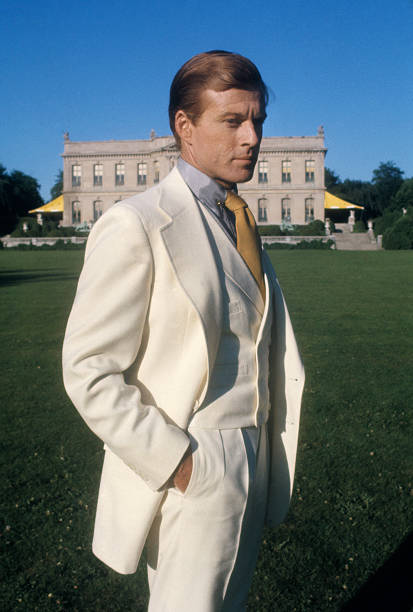
Gatsby’s mansion is in West Egg, a section of the island where the nouveau riche live. Across a bay is East Egg, home of old-money types, including Nick’s distant cousin and Gatsby’s lost love, Daisy Buchanan, and her brutish, racist husband, Tom, who keeps a mistress in New York. Gatsby is obsessed with rekindling his romance with Daisy, staring every night at the green light at the end of her dock, and his effort symbolizes the elusiveness and indeed, the hollowness of the American Dream. Nick gets drawn into reuniting Daisy and Gatsby, meanwhile carrying on a relationship with a beautiful socialite and golfer, Jordan Baker.
Clayton may have tinkered with Coppola’s screenplay, but at any rate, the film remains remarkably faithful to the novel. It uses Fitzgerald’s words most of the time, although no, the line “rich girls don’t marry poor boys” is not in the book. And sometimes the film shows rather than tells us. For instance, in the novel Nick recalls hearing a story about Jordan cheating at golf; in the movie, we see her doing it, with Nick and Daisy as witnesses. But Nick doesn’t hold it against Jordan, as to him, “dishonesty in a woman is a thing you never blame deeply.” Being a Gatsby fanatic, I wouldn’t mind if the film were even a little more faithful, but I’m satisfied with this version.
And it’s perfectly cast—almost. The gorgeous Redford, at the height of his stardom, is every inch the “elegant young roughneck” described in the novel, looking fantastic in his expensive suits and silk shirts but hinting at the complexities and possible criminality underneath his beautiful exterior. What redeems Gatsby is his faithfulness to his dream. “Gatsby turned out all right in the end,” Nick says in the book, despite the “foul dust” that “floated in the wake of his dreams.”
Redford’s million-watt smile also fits Fitzgerald’s description: “It was one of those rare smiles with a quality of eternal reassurance in it, that you may come across four or five times in life. It faced —or seemed to face—the whole external world for an instant, and then concentrated on you with an irresistible prejudice in your favor.”
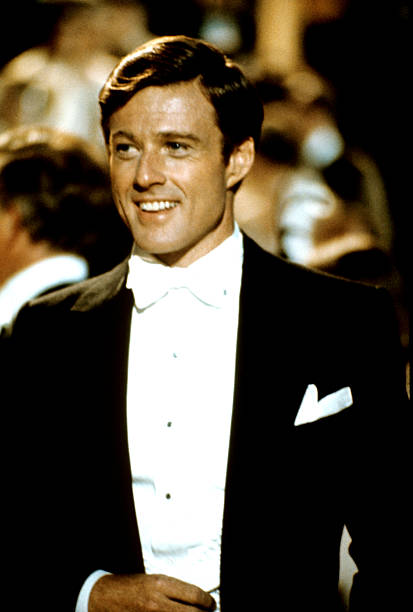
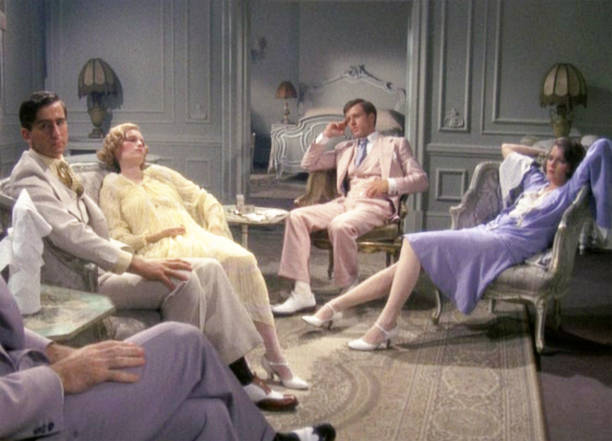
Sam Waterston, early in his career, is wonderful at portraying Nick’s devotion to Gatsby—some scholars read Nick as gay and in love with Gatsby—as well as the deception that Nick is capable of. He considers himself one of the few honest people he’s ever known, but he’s willing to keep some secrets. Lovely Lois Chiles is charming as Jordan, a strong, independent woman in an era in which women were gaining new freedoms. Some scholars read her as gay too.
Bruce Dern as Tom is one of the best things in the movie. Yes, he’s dark-haired while Tom is described in the book as blond, but that’s a very minor point. Tom is mean, and Dern excels at portraying meanness. Hey, a few years earlier, in The Cowboys, he killed John Wayne on the screen! A fine actor, Dern can play nice guys too, but as Tom he’s perfectly menacing. Tom reads racist books and takes their theories seriously, has extramarital affairs while condemning Daisy’s “running around,” and can’t stand that she is slipping out of his grasp. He is ultimately responsible for the tragedy that ends the novel and film.
Karen Black, who was always good at playing floozies, is great as Tom’s current lover, Myrtle Wilson, a working-class woman married to hapless and clueless garage owner George Wilson, portrayed by Scott Wilson, also excellent. Myrtle tries to act as she assumes a wealthy woman would and loves Tom enough to put up with his brutality. I met Karen Black at a screening of Alfred Hitchcock’s Family Plot a few years before she died, and I told her I adored the 1974 version of Gatsby and was sorry it wasn’t received better. In her wonderfully breathy voice, she said, “Oh, honey, they loved it in Europe.” I cherish that conversation!
Mia Farrow as Daisy is perhaps the weak link among the cast. I’ve enjoyed her performances in other movies, and she seems like a lovely person in real life, but in Gatsby, we never quite see what about Daisy motivates Gatsby’s devotion. Well, the character of Daisy is something of a cipher; that was a problem for the fine actress Carey Mulligan in the 2013 version too. Daisy is given life mainly by Gatsby’s image of her, partly because he aspires to the position in society she represents. But Farrow looks wonderful in her 1920s costumes and shares some beautifully romantic moments with Redford, as when he, in the military uniform he wore when they first met—during World War I, when he was training in her hometown, Louisville, Kentucky— and she, in a dress from that period, dance in a room lit by a single candle.
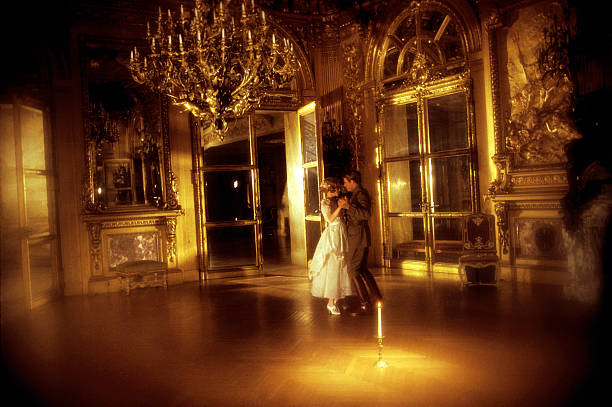
About those costumes: Theoni V. Aldredge won an Oscar for them. Retailers were promoting “the Gatsby look” before the film came out, but it didn’t catch on. Its only other Oscar was for Nelson Riddle for original song score or adaptation. His score makes excellent use of songs from the era, most memorably Irving Berlin’s wistful ballad “What’ll I Do”: “Gone is the romance that was so divine…” Waterston, Dern, and Black were nominated for Golden Globes.
Critical reception
It was mostly negative.
“The Great Gatsby is a superficially beautiful hunk of a movie with nothing much in common with the spirit of F. Scott Fitzgerald’s novel,” Roger Ebert wrote in the Chicago Sun-Times upon its release. “I wonder what Fitzgerald, whose prose was so graceful, so elegantly controlled, would have made of it: of the willingness to spend so much time and energy on exterior effect while never penetrating to the souls of the characters.”
In New York Magazine, the reliably acerbic Judith Crist wrote, “The concern in Fitzgerald’s Gatsby was with character, but the movie leaves us more involved with trappings than tragedy.” She also called Fitzgerald’s dialogue “readable but barely speakable” and thought Coppola might have dashed off the screenplay in three days rather than the reported three weeks.
New York Times critic Vincent Canby praised most of the performances but found Coppola and Clayton’s work wanting. He termed the film “all-too-reverential” to Fitzgerald’s novel without capturing its spirit. Coppola and Clayton, he said, “have treated the book as if it were an illustrated encyclopedia of the manners and morals of the nineteen-twenties instead of a short, elegiacal romantic novel whose idiosyncratic beat demands something more perceptive from the moviemakers than mere fidelity to plot.”
I beg to differ. The fidelity is a good thing, and so is the movie’s visual beauty. But it does get to the souls of the characters. You can feel Gatsby’s faithfulness to his elusive dream and the shakiness of the persona that the once-impoverished Midwesterner James Gatz has built up around himself—“he invented just the sort of Jay Gatsby that a seventeen-year-old boy would be likely to invent, and to this conception he was faithful to the end.” You can feel how Nick is captivated by him, even as he professes to have contempt for all Gatsby represents. Tom’s cruelty, Daisy’s ambivalence about relinquishing her privilege for love, Myrtle’s and George’s desperation — all are palpable.
There have been some reconsiderations of the film. Shortly after Redford’s death, British film scholar Daniel O’Brien, writing on The Conversation, listed Gatsby among Redford’s 10 best films. “With his good looks and charisma, Redford embodied Gatsby’s allure, mystery and melancholy, even as the film itself divided critics,” O’Brien wrote. “Lavish costumes and period design capture the excess of the Jazz Age, while Redford grounds the story’s glittering parties with Gatsby’s aching loneliness.”
Posthumous praise for Redford’s performance also came from The Guardian’s Ronald Bergan: “Romantically flawed and fallen heroes were his forte, so he was perfectly cast in the title role of The Great Gatsby (1974).” And Sandra Bergeson of Parade noted, “Redford’s performance as the mysterious Jay Gatsby is what makes the feature still stand the test of time.”
The film did make money. The Internet Movie Database gives the budget as $6.5 million and the worldwide gross as more than $20 million.
Other versions
There have been four films of Gatsby. A 1926 silent version is lost; the trailer can be viewed on YouTube, and it looks like the film was a lavish production. The trailer also pays homage to the novel’s original cover, with Daisy’s eyes. It was directed by Herbert Brenon from a screenplay by Elizabeth Meehan and Becky Gardiner. The cast included Warner Baxter as Gatsby, Lois Wilson as Daisy, Neil Hamilton as Nick, Hale Hamilton as Tom, Carmelita Geraghty as Jordan, Georgia Hale as Myrtle, and William Powell, far from his dapper Nick Charles image, as George Wilson. More like Godfrey before Irene Bullock brought him home!
IMDB has found and posted three reviews of this version, all positive. Mordaunt Hall of The New York Times pronounced it “quite a good entertainment” but said, “at the same time it is obvious that it would have benefited by more imaginative direction.” In Variety, Abel Green called it “a good, interesting, gripping cinema exposition.” In Motion Picture News, Laurence Reid wrote, “It’s a sophisticated story, told with first-rate light and shadows. The spirit of the original is there with plenty to spare.”
Fun fact: Daisy and Tom’s daughter, Pammy, was played by Nancy Kelly, five years old at the time. She is best remembered today as the mother in The Bad Seed.
In 1949, just as Fitzgerald was being rediscovered, Paramount released a version with a film noir-ish treatment. The poster on IMDB has a painting of star Alan Ladd looking not much like Alan Ladd but every inch the film noir hero or antihero in trench coat and fedora, not typical Gatsby garb, although typical for Ladd in the 1940s. I saw this version at the Los Angeles film noir festival several years ago, mostly out of curiosity and because I’m a completist about seeing every version of the story I can. I found it wanting.
Ladd is a serviceable Gatsby, and that can be said of others in the cast as well—Betty Field as Daisy, Barry Sullivan (not menacing enough) as Tom, Macdonald Carey as Nick, Ruth Hussey as Jordan, Howard da Silva as George (he turns up in the 1974 version as Gatsby’s mentor Meyer Wolfsheim), and Shelley Winters, another actress very good at playing floozies, as Myrtle. (There’s a very cheesy special effect involving Myrtle.) All have been better in better movies—I have a particular love for Hussey in The Philadelphia Story. And film noir fans will enjoy spotting Elisha Cook Jr. as Klipspringer, Gatsby’s semi-permanent guest.
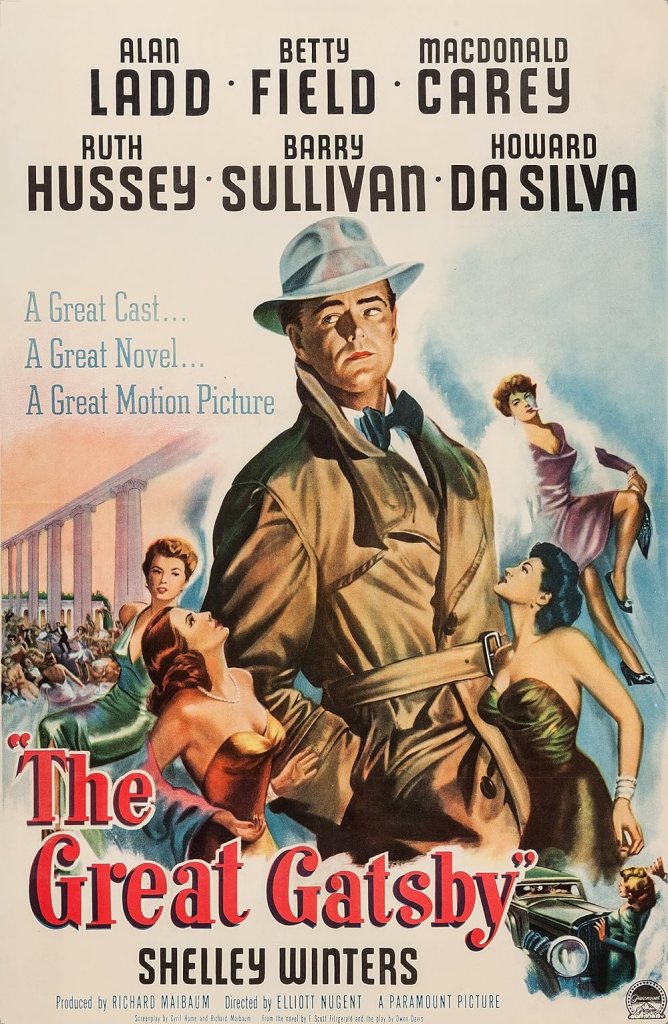
But my main quibble with this adaptation is liberties with the story. Most of the blame undoubtedly goes to the Production Code: Gatsby, Tom, and Daisy are shown regretting some of their misdeeds, something very out of character. Also, there’s a long flashback to Gatsby’s youth with modern-day pirate Dan Cody (Henry Hull), something that gets only brief mention in the novel. It was a pivotal time in Gatsby’s life, but the extended flashback is unnecessary. Elliott Nugent directed; the screenplay is credited to Cyril Hume and Richard Malbaum, citing both the novel and Owen Davis’s 1926 Broadway adaptation as sources.
NPR literary critic Maureen Corrigan, in her wonderful book So We Read On: How the Great Gatsby Came to Be and Why It Endures, dubbed this the best screen adaptation. Well, we all have our preferences.
From reviewers at the time: Bosley Crowther of The New York Times thought Paramount chose Gatsby mainly as a vehicle for Ladd. “Most of the tragic implications and bitter ironies of Mr. Fitzgerald’s work have gone by the board in allowing for the generous exhibition of Mr. Ladd,” he wrote. Variety’s reviewer, apparently anonymous, liked Ladd’s performance but said the film “fails to jell as a first-class screen entertainment,” emphasizing Gatsby and Daisy’s romance rather than being “a penetrating portrait of the era or the people who flitted through it.”
The 2013 version, directed and co-written (with Craig Pearce) by Baz Lurhmann and starring Leonardo DiCaprio as Gatsby, is another curiosity. DiCaprio is a good actor, but to me he seems eternally adolescent—my problem, I guess. Tobey Maguire, another fine actor, does very well as Nick, but there’s a framing story with Nick getting treatment for alcoholism and writing the tale of Gatsby—something not really needed, IMHO. A friend of mine cleverly commented that teachers will be able to tell their students cheated by seeing this film instead of reading the book if their essays include “when Nick was in rehab.” Other main cast members are Carey Mulligan as Daisy, Joel Edgerton as Tom, Elizabeth Debecki as Jordan, Isla Fisher as Myrtle, and Jason Clarke as George. Luhrmann, ever the iconoclast, mixes modern music with period songs for the soundtrack, which doesn’t really work. The party scenes are excessive, even compared with the other versions and Fitzgerald’s descriptions, while the quieter moments are well rendered.

Reviews were mixed. Matt Zoller Seitz, writing on RogerEbert.com, which outlived the great Sun-Times critic (Ebert died in 2013), pronounced the film “immense and overwrought — lumbering across the screen like the biggest, trashiest, loudest parade float of all time.” Nick Pinkerton of Sight and Sound rather liked it: “Luhrmann’s Gatsby owes much of its frisson to the tension between the director’s destructive extravagance and the melancholy optimism of DiCaprio’s Gatsby, as different as Saturday night and Sunday morning. It is not the novel, no, but happy to report, the madly embattled result is a real movie.” But James Berardinelli of ReelViews wrote, “It doesn’t really feel like the 1920s. There are too many out-of-period tweaks that dispel the illusion. It’s one thing for Luhrmann to do this sort of thing in a fantasy/musical like Moulin Rouge but quite another thing to force-feed it into an adaptation of a revered drama.”
Adaptations for stage, the small screen, and more
The 1926 Broadway version brought new fame plus royalties to Fitzgerald (who was always strapped for cash), and it was a success, winning a Pulitzer Prize and excellent reviews. It ran for three months, which was respectable given that Broadway shows didn’t run for years back then. Longtime Broadway star James Rennie played Gatsby, and Florence Eldridge, who had an esteemed stage career as well but is best known to movie fans as the wife of Fredric March, was Daisy. Another fun fact for lovers of classic film: The director was George Cukor.
Scholar Anne Margaret Daniel recently found a copy of the script, long thought lost, stashed in an archive at Colorado State University, and last year she and coeditor James L.W. West III published it in The Great Gatsby: The 1926 Broadway Script, which also includes their introduction, reviews, photographs, and publicity materials.
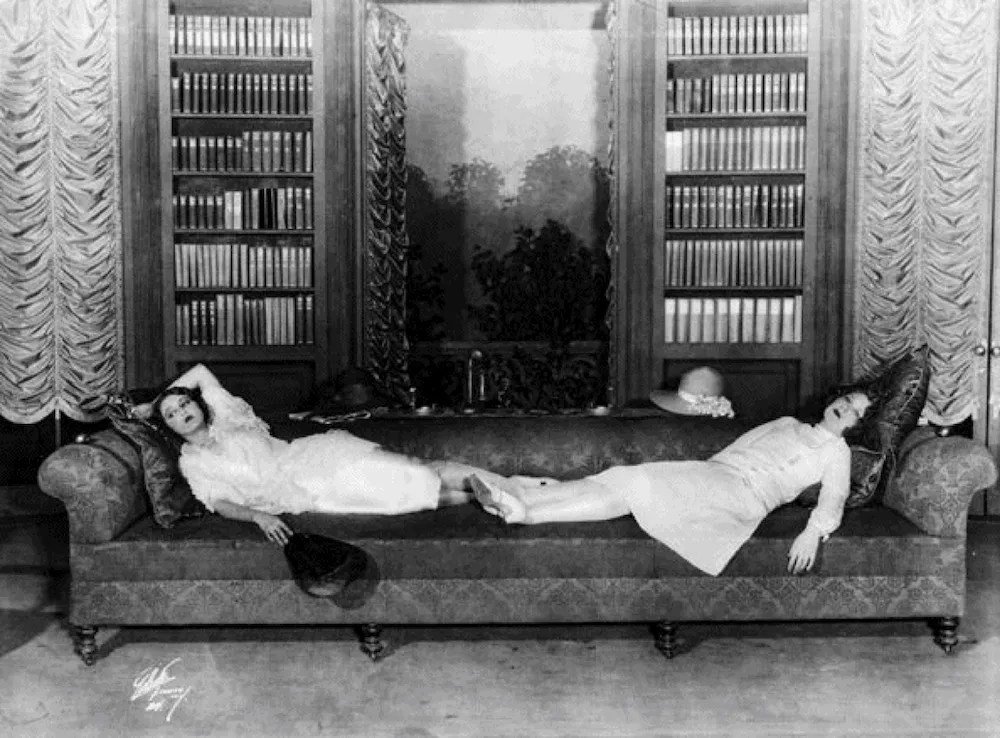
“It reveals that Davis took many liberties with Fitzgerald’s storyline. Nick Carraway is no longer the narrator, new characters are invented, and Jay Gatsby’s past, which is revealed gradually throughout the novel, is presented all at once near the start,” according to an article in the U.K.’s Observer.
“Davis made some interesting changes,” Daniel told the publication. “He introduces some of the gangster characters who are in Gatsby’s underworld. He makes it very clear that Gatsby is in the business of organised crime, which is an apt reading of the book and, of course, it makes it more dramatic on stage. It’s a fascinating version of Gatsby. It absolutely captures the Jazz Age heat.” The novel wasn’t considered a classic yet, she said, so there wasn’t a tendency to carp at changes.
Fitzgerald was protective of his material but excited for the Broadway version, West told the paper. But the author probably would have been “a pain in the neck” if he’d attended rehearsals, West and Daniel wrote in their introduction.
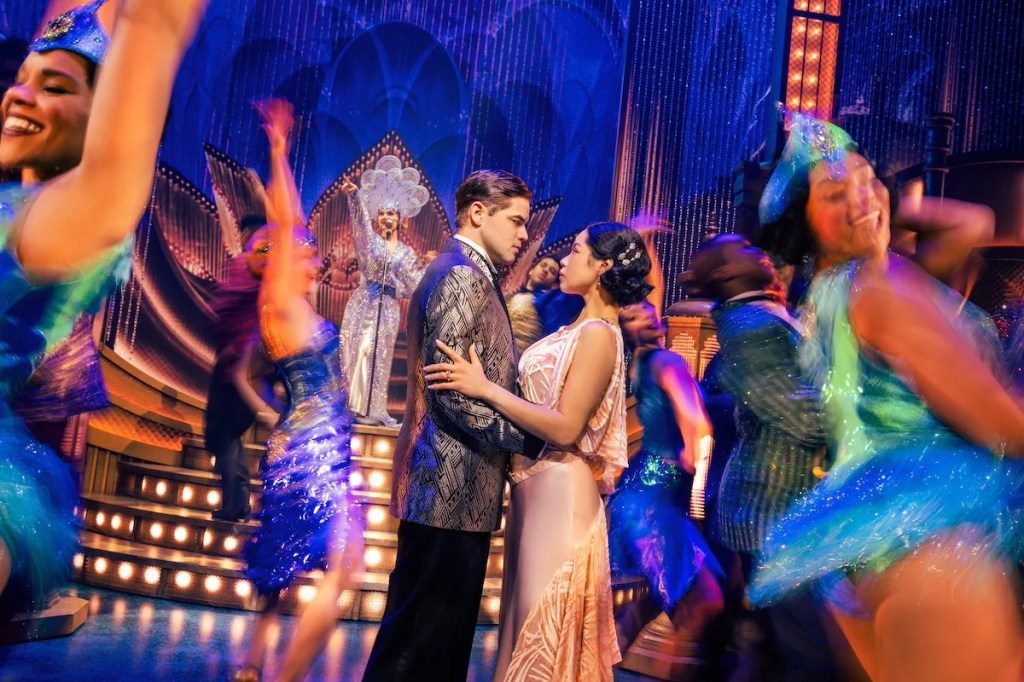
There is now a musical of Gatsby on Broadway; it’s been running since April 2024 despite mixed reviews. Several critics thought it captured the spectacle of Gatsby better than the tragedy, but a friend of mine who loves the novel as much as I do saw it and enjoyed it very much. The adaptation is by Kait Kerrigan, with music by Jason Howland and lyrics by Nathan Tysen.
Another musical version, Gatsby: An American Myth, premiered in 2024 at the American Repertory Theater at Harvard University in Cambridge, Massachusetts. It received largely good reviews, and London and Broadway productions are expected. There is a GatsbyBway.com website already, which tells users to stay tuned for further news. There is some star power behind it—Florence Welch of Florence + the Machine contributed music and lyrics. There’s additional music by Thomas Bartlett, the book (script) by Martina Majok, and David Cromer has come on as director, fresh off the success of Good Night and Good Luck with George Clooney.
In 1991, Wisdom Bridge Theatre in Chicago, then my hometown, staged a nonmusical play of Gatsby. Being a (mostly) Gatsby completist, of course I saw it. There was a good performance by Harry Lennix as Gatsby (color-blind casting; Lennix is Black). He’s gone on to many other stage and screen roles, and he got a Tony nomination this year for playing a Jesse Jackson-style political activist in Branden Jacobs-Jenkins’s Pulitzer-winner Purpose. I wasn’t impressed with the production overall, though, not because of liberties with the text, but just because I didn’t think the quality was high. But I still was glad I saw it just because I love the story so much. A friend who went with me liked it less; she mentioned that she adores the novel too, so she found it hard to enjoy a poor adaptation. For me, however, because I love the novel, I find something to appreciate in any version of Gatsby.
One version I missed was a TV movie shown in 2001 on A&E with Toby Stephens as Gatsby, Mira Sorvino as Daisy, and star-to-be Paul Rudd as Nick. I can’t find many critic reviews; IMDB user reviews vary. It’s available on YouTube and streaming services.
Then there was Elevator Repair Service’s Gatz, a six-and-a-half-hour onstage reading of the entire novel with actors embodying various characters. It premiered in New York City in 2004 and has been produced in many other cities since then, returning to NYC at the Public Theater in 2024. On my bucket list!
There have also been an opera and a ballet based on Gatsby, plus numerous spin-off novels, such as Nick by Michael Farris Smith, exploring Nick Carraway’s life before he met Gatsby, and The Chosen and the Beautiful by Nghi Vo, portraying Jordan Baker as a bisexual Asian American adopted by a white couple. I have yet to read these, but I can highly recommend The Double Bind by Chris Bohjalian, a novel in which the characters in Gatsby are real people—or are they just in the mind of Laurel Estabrook, a young woman who’s survived a horrific assault? And I recently read the first graphic novel version of Gatsby, adapted by Fred Fordham and illustrated by Aya Morton, which I enjoyed very much.
In the end, this all shows that The Great Gatsby continues to fascinate. The Redford film ends with some beautiful lines from the novel: “I thought of Gatsby’s wonder when he first saw the green light at the end of Daisy’s dock. … His dream must have seemed so close that he could hardly fail to grasp it. He did not know that it was already behind him.” The novel continues after this, leading up to one of the best closing lines in literature: “Gatsby believed in the green light, the orgiastic future that year by year recedes before us. It eluded us then, but that’s no matter—tomorrow we will run faster, stretch out our arms farther … And one fine morning—
“So we beat on, boats against the current, borne back ceaselessly into the past.”
_____________________________________
Trudy, I hope you come back to Once Upon a Screen often. Now I have to go watch a few pictures about Jay Gatsby.
More about The Great Gatsby in its adaptations:
How ‘Gatsby’ Went From A Moldering Flop to a Great American Novel
How Princetonians Saved ‘The Great Gatsby”
Buy F. Scott Fitzgerald’s novel
Roger Ebert’s review of the Redford film version
Judith Crist’s review of the Redford film version
Vincent Canby NY Times review of Redford version
Maureen Corrigan on the novel’s 100th anniversary
From Parade, Robert Redford’s 10 Best Performances Ranked
Robert Red Obituary in The Guardian
Robert Redford: Ten Great Films from a Brilliant Career
IMDB for the silent film version from 1926
Motion Picture News review of silent version
Variety review of silent version
IMDB for the 1949 Ladd version
NY Times review of Alan Ladd version
Variety review of Alan Ladd version
RogerEbert.com review of DiCaprio version
Sight and Sound review of DiCaprio version
ReelViews review of DiCaprio version
Also American Repertory Theater production
The Chosen and the Beautiful by Nghi Vo
The Double Bind by Chris Bohjalian
 Once upon a screen...
Absolutely agree the 1974 film is an excellent adaptation of Fitzgerald’s novel, including the cast and the dream-like cinematography. In some ways, this would be a tricky novel to adapt to screen, but this version does a stellar job.