The blogosphere is all abuzz this week in celebration of the life and work of Gene Kelly. Today would have been his 100th birthday. I just had to do something to honor him. By way of a simple tribute to him and my (sentimental) favorite of his films, I jump on the Gene Kelly love bandwagon.
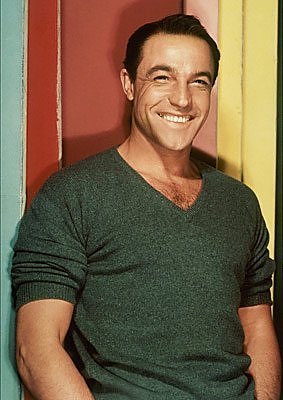

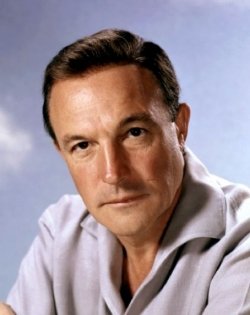
The story of Summer Stock.
Metro Goldwyn Mayer (MGM), the studio that boasted “more stars than there are in the heavens” served up gem after gem with astounding talents and memorable performances for years. I eat all of it up with extra servings whenever possible. It’s an impossibility to choose one favorite number or scene from the rich MGM legacy. But Gene Kelly was special among a sea of unforgettables. With never before seen athleticism and style he brought dance to everyman, made it “cool” and masculine to dance. That’s quite a feat. But it’s not all he did. He also consistently pushed the envelope to portray dance as art on film.
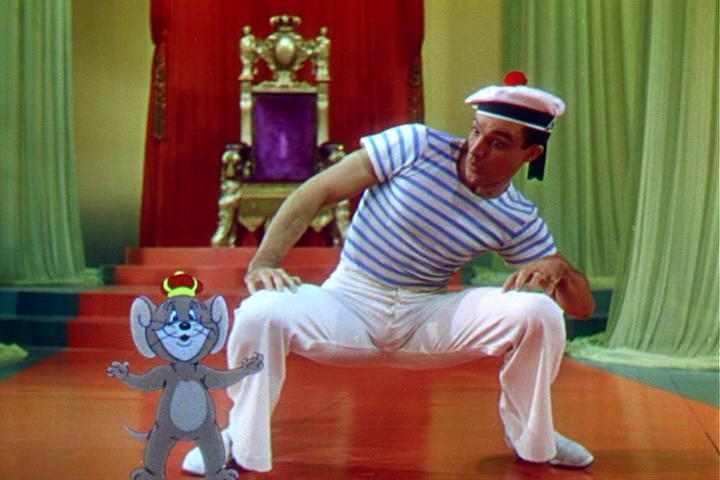
As if his unique dancing talents weren’t enough, by 1950 Kelly had broken the movie musical mold behind the scenes through his choreography and direction aweing audiences and setting the bar far beyond what anyone else had ever done. In 1945’s Anchors Aweigh, directed by George Sidney, he dances with Jerry Mouse of Tom and Jerry fame in what would become that film’s most popular sequence. The marriage of live-action and animation the likes of which no one had seen before.
In 1949 he took the musical On The Town in the first-ever feature film in the genre to be shot on location. Gene Kelly co-directed On the Town with friend and partner, Stanley Donen.

This post, however, isn’t about the films where Gene Kelly broke the mold but about the one he didn’t want to do, which happens to be my sentimental favorite, Charles Walters’, Summer Stock (1950). He didn’t want to do it but he did it for Judy. Reason one why I love this film so much.
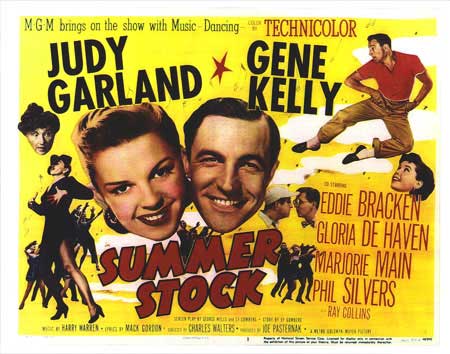
Gene Kelly was a smash hit on Broadway as the star of Pal Joey, the Rodgers and Hart musical that opened at the Ethel Barrymore theater on the great white way in December 1940. By that year, Judy Garland was a seasoned veteran of film musicals and one of MGM’s biggest stars. Due to Kelly’s success in Pal Joey he would get a contract with MGM Studios and make his screen debut in Busby Berkeley’s, For Me and My Gal (1942), starring none other than Judy Garland – incidentally, this was the first film where Garland’s name appeared before the title, her star had reached the top at the studio at the top, while Kelly’s started its climb. And by all accounts he never forgot how supportive she was, taking him under her wing and showing him the ropes. It is said that it was Judy Garland who actually got Kelly the job on For Me and My Gal after having seen him on stage in Pal Joey.
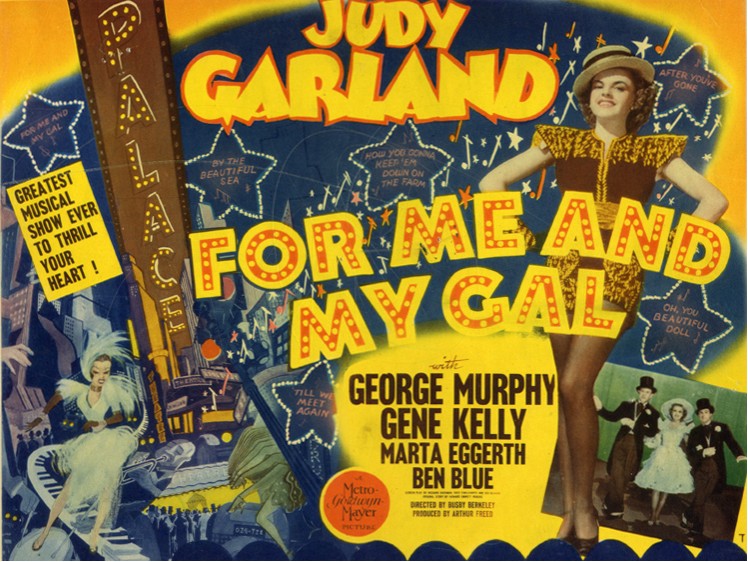 For Me and My Gal turned out to be the first of three films Gene Kelly and Judy Garland would star in together. The second, Vincente Minnelli’s, The Pirate in 1948 was a highly anticipated reunion, which both stars and director loved but it turned out to be a flop at the box-office despite both Kelly and Garland being at the top of their game and hugely popular with audiences. But within the span of just a couple of years, Gene Kelly’s talent and drive both in front and behind the camera would catapult him into the position of key player of the Hollywood movie musical while America’s sweetheart began to have troubles that would irrevocably affect her career. By 1950 Judy Garland needed a hit movie. She called on MGM’s biggest star and friend, Gene Kelly.
Summer Stock was originally intended as a reunion for Judy Garland and Mickey Rooney and the script reflects it by the similarities between this film and the several Garland and Rooney did more than a decade earlier. But by 1949, Mickey Rooney’s star power had diminished and MGM decided to star the popular, Gene Kelly. When presented with the idea and script for Summer Stock, Gene Kelly resisted. His goals, ideas and scope were leaps and bounds beyond a musical that went back to the barn, both figuratively and literally. But Judy needed his support and because she’d been there for him, he was now there for her. In a sense, things had come full circle. She’d been released from Annie Get Your Gun, her previous film, unable to finish it due to health issues. So they made Summer Stock.
In Summer Stock, Judy Garland stars as Jane Falbury, a small-time farmer trying to make ends meet who soon finds her homestead invaded by a theatrical troupe. Jane’s sister, Abigail (played by Gloria deHaven), who’s not cut out for farm life aspires to be an actress and got mixed up with “show-biz” types and fell in love with Joe Ross, the actor in charge of the troupe. Joe and the troupe are broke and need a stage where they can preview their show. Star-struck Abigail offers up the farm. What ensues is both fun and funny helped along by a wonderful cast, which includes Marjorie Main, Eddie Bracken and Phil Silvers.

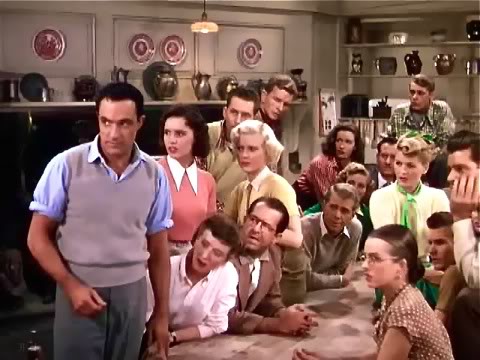
I can’t pretend this film is unique in any way and perhaps the story’s not memorable to anyone other than me. As is the case with so many MGM musicals before it, Summer Stock is made up of fanciful moments where song and dance break out at a moment’s notice – a standard musical plot. It is an old-fashioned, let’s put on a show musical. But for this viewer, oodles of fun. Yes, all the players are disposed in the direction of song or dance but when they do joy reigns. From early on in the film when Judy as Jane sings, “If You Feel Like Singing, Sing” and then “Happy Harvest” on a tractor, I am enchanted. I might add, Judy Garland is in outstanding musical form here – extraordinary voice.

Then Mr. Kelly and his troupe arrive and by Jane’s insistence, pitch in to do their share of the farm chores. Hilarity! I can picture myself, a city girl afraid of the smallest bug trying to feed chickens and hogs. I’d never be as funny as Phil Silvers though. “Whatta ya think they got ME doing? Picking eggs. EGGS! E-G-Z!” Of course, this convergence of thespians on a farm also lends toward other wonderful numbers, including the fun, “Dig, Dig, Dig for Your Dinner” and a duet by Kelly and Silvers of “Heavenly Music” late in the film, which I love. I call it a duet but the two share the stage with a variety of very vocal dogs.
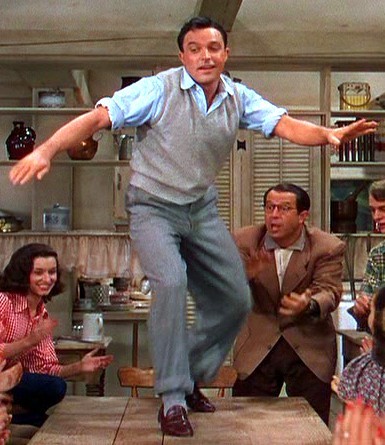
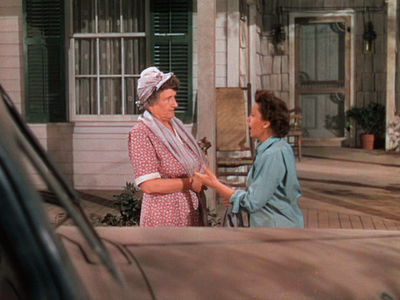
Some of the funny scenes in Summer Stock are provided by Eddie Bracken who plays Orville Wingait, Jane’s rustic and very conservative fiance and veteran character actress, Marjorie Main as the Falbury farm maid.

As I mentioned, Judy Garland came off of somewhat of a sabbatical to do this film. She was well-rested when shooting began but she was still battling demons and the shoot was not easy for her to get through. Absent from the production for days at a time, MGM was growing leery of Judy Garland. Summer Stock was to be her last with the studio that made her a star and for which she’d let her extraordinary talent shine countless times. The ones who stayed patient and loyal – the film’s producer, Joe Pasternak who’d worked with Judy several times before and said, “everyone who worked with Judy knew her magical genius and respected it,” the cast which was made up of long-time Judy Garland friends who served as a great support system for her. And then there was Gene Kelly who shared a mutual admiration and affection for Judy, which clearly comes through in the film.


If I were to mention all the songs I love from this film it would be all of them. I’ll spare you that. But the dance routine in the barn between Gene and Judy is especially worthy of note. First of all, it’s one her best dance routines in any film and although it doesn’t stack up to the great Gene Kelly numbers we’ve come to be accustomed to, I think they still look fabulous dancing together. Judy’s no slouch!
Joe Ross’ show and love both bloom in Summer Stock.
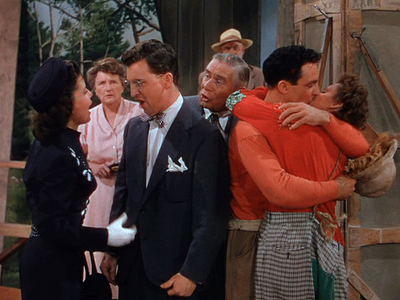
Jane is forced to step in as the show’s leading lady when her spoiled sister runs off with the star. We see Joe teaching her all the steps, the fumbles and aches as time elapses. Then it’s opening night. Joe and Jane have fallen in love and the farmer girl has to star opposite the dashing director. The barn is transformed to rival the Ziegfeld Theater. Number after number Jane and Joe hit it out of the park. It’s almost as though he were the greatest song and dance man in film history and she, the greatest entertainer of the 20th Century. No doubt there’s something about grease paint and love that makes this happen!
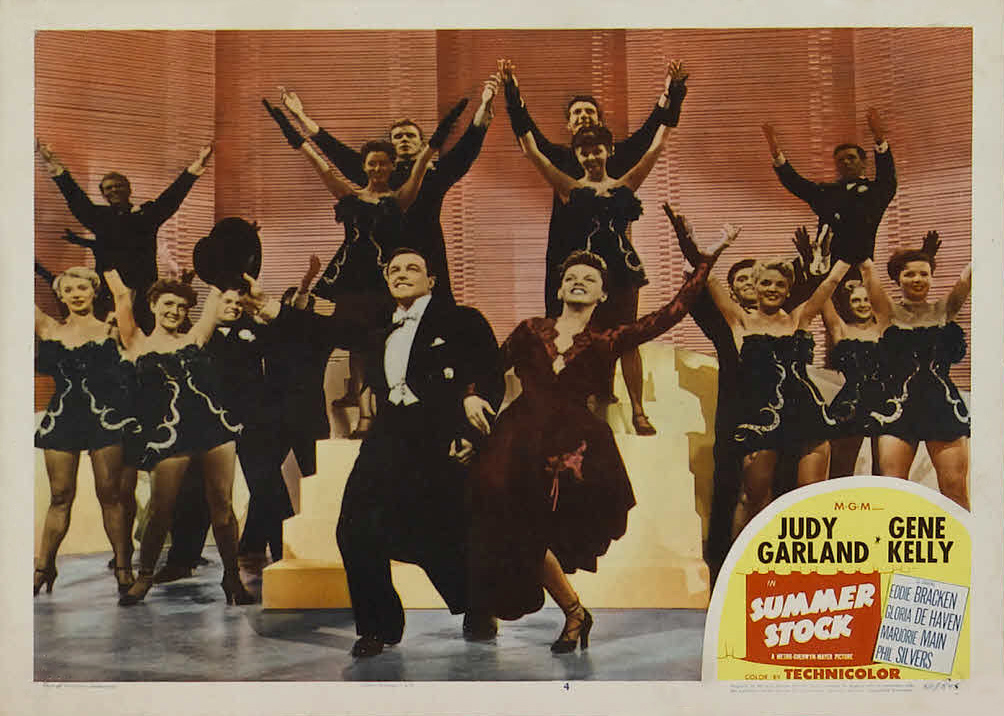
The delay-ridden production of Summer Stock wrapped in February 1950. After close scrutiny, it was decided the film still needed a powerhouse finale. A month later Judy was called in to film what would be one of her most iconic numbers in film and her last ever for MGM. Judy returned looking svelte and sounding sensational in a signature performance.
Judy left audiences in awe at the end of Summer Stock with that number, one that’s inspiring no matter how many times one sees it. But it wasn’t the only moment of awe in the film. While Judy missed days during production, Gene Kelly took advantage and worked on a solo routine that is the other highlight in the film. To say that a Gene Kelly routine is a highlight in what many perceive as one of his mediocre films means little in the scope of his brilliant career. But to me, this is a gem among all of his genius. My favorite of all his routines – ever.
A reprise of the beautiful, “You Wonderful You” number, a dusty barn, a squeaky board, a newspaper and Gene Kelly. Pure magic.
I’m completely transfixed by his using the squeaky board in a soft shoe to start the number, the music swells to feature the usual Kelly athleticism, sensational music, the newspaper-across-the-barn-floor sandy sound but when he splits that newspaper – my goodness! C’MON! It’s fantastic!
In Summer Stock you get a film where each member of a premier cast is given their moment to shine and every time you turn around you get to hear Judy Garland sing and watch Gene Kelly dance. I was awe-struck the first time I saw On the Town as a child. I was newly enchanted just weeks ago when I had the privilege of watching Singin’ in the Rain on the big screen for the first time. But I can watch Judy and Gene dance and sing in a barn every day of my life. Summer Stock is a special joy.
After Summer Stock, Gene Kelly continued on his track to make movie history. He followed Summer Stock with An American in Paris and had Singin’ in the Rain still to come. The first is an Academy Award winning Best Picture, the other considered one of the best films ever made. Neither would have been without him.
For 72 years now Gene Kelly has been wowing audiences and I can’t imagine that he will cease to do so as long as we have his work to watch and enjoy. His contribution to film entertainment is immeasurable. A director, a producer, a choreographer and a star. On the 100th anniversary of his birth, here’s to the one without whom the Golden Age of musicals would not have been Golden.
To Gene Kelly.
I‘m glad I met you
You wonderful you
I can’t forget you
You wonderful you
You’re like a breath of spring
A whole new thing that’s happened
And without much adue
I look at you and
There stands love
_____________________________________________________
In honor of the 100th anniversary of his birth, today is Gene Kelly day on Turner Classic Movies‘ (TCM) Summer Under the Stars (SUTS). TCM will feature 24 hours of his films. Summer Stock is not on the schedule but it’s the one I chose to honor in his memory. I am submitting this entry as part of the SUTS blogathon hosted by Michael of Scribehard on Film and Jill of Sittin’ On a Backyard Fence. This event will last all month to coincide with the TCM schedule. For details on the schedule, participants and submissions, go to either of the host sites and prepare to be enchanted and informed.

 Once upon a screen...
I also adore the fact that Gene made this film for Judy so you’re not alone. ‘You, Wonderful You’ is one of my favourite songs, just for the interaction between the two. They had a chemistry that is really difficult to ignore. Equally, Judy’s rendition of ‘Friendly Star’ may only include a few seconds of Gene on camera but, my, those few seconds… Just excellent.
Hi Lucy! Thanks for stopping in. “Friendly Star” is brilliant! I left it out because I mentioned it in another post I did about Judy’s greatest performance so didn’t want to be redundant. When most of what I post here are gush-fests, it’s easy to get repetitive. I love Gene and Judy together in this film especially. Just warms my heart.
Aurora
Thanks for posting the “Get Happy” clip and the Gene Kelly solo. I could watch those two things all day.
For some a picture just won’t do. Magic!
Aurora
Somehow, despite being a fan of both Kelly and Garland, I’ve managed to miss this one, and your write-up makes me all the more eager now to check it out. The only scene I’ve seen is the “Get Happy” number (because it’s used in THAT’S ENTERTAINMENT), which I liked.
Oh, Sean – watch it and let me know what you think. A definite charmer!
Aurora
Aurora, great in depth review of Summer Stock! Thanks again for hosting the Lemmon-rific #TCMParty last night!
Had fun too, Joel! Always great with passionate classic fans like you! Thanks for your comment.
Aurora
Hi Aurora! I just adore this movie! Isn’t that newspaper scene just the most? 🙂 I could always sense good chemistry between them here, which I think why I fell in love with it the first time I saw it, and now I understand. Thanks for the backstory. It makes the movie even more special!
I haven’t watched Summer Stock yet, but I’m familiar with both the Get Happy and the newspaper routines. Nice to see the show they make together (barn dances are always great). nobody can imagine that Judy was going through tough moments during the making of the film.
Kisses!
SO true! I can barely think if I have troubles and she was still in astounding voice – what an amazing talent she was!
Thanks, Le for visiting!
I love Garland’s performance so much in SUMMER STOCK, especially her “Get Happy” number, that I forgot Gene Kelly was in it! My favorite films are the ones they made together. I also cannot get enough of Marjorie Main. And i really like the first picture you have here of Kelly – he looks like a modern movie star. Here’s my breakdown of Kelly’s films on TCM – hope you enjoy!
http://thegreatkh.blogspot.co.uk/2012/08/happy-100th-birthday-gene-kelly.html
Thanks, Margaret! I actually favorited your post on twitter so I can read it tonight! Thanks for stopping in. I absolutely love Summer Stock (obviously) so couldn’t choose another one to honor today. LOVE Marjorie Main too!
Aurora
Oh, how I love this movie! I understand that it’s formulaic and breaks no new cinematic ground but it’s so beautifully made. From when Judy seems to stumble on “… everyone can’t be a …. Bing” in “If You Feel Like Singing, Sing!” because she’s reaching for the shower towel, we know we’re in the hands of craftspeople at the top of their games. Imagine the care that went into looping that moment. And the scene where Kelly tapdances in the spotlight with the newspaper on the creaky floor is genius! Thanks for including the “magical” clip. I like this movie more than An American in Paris — even though I appreciate An American in Paris is a “better” film — because Gene and Judy have so much heart. You did a wonderful post on a dear, sweet movie.
😀 I LOVE IT! So glad you do as well. Agree! Two wonderful talents and they are a joy to see and hear. I also like this one more than An American in Paris! It is my absolute sentimental favorite. I’m blown away by so many of each of the two stars on screen in many other films but this one is special. Thanks so much for your comments. I was unable to choose another to write about.
Aurora
Reblogged this on Outspoken and Freckled.
Aurora~ another amazing write-up! You constantly out-do yourself with every post. It’s positively magical to see Gene Kelly and Judy Garland on the same screen. What a duo of talent!!
Thank you, Kellee! They are magic.
Great article. TMC not including Summer Stock in the 24 hour Gene-a-thon was a mistake. I miss the revival theaters. Getting more difficult to find. I spent many wonderful weekends at them, particularly when they featured Gene Kelly. So much fun watching on the big screen and watching with others who appreciated his talent.
Thanks for this love letter to this film, which was recently shown with a slate of other Judy movies. I hadn’t seen it in years and was glad to see it again.
It’s sweet and like you, I love that Gene did it for Judy. And his numbers are superb. The “You Wonderful You” scene with the newspaper and squeaky board still captivates me.
Me too as I noted! It’s one of my favorites and the fact Judy returned after the difficulties to tape that iconic number is wonderful. Thanks so much for stopping in!
Aurora
Reblogged this on goosepimply all over and commented:
Sigh… Gene Kelly (His birthday’s a-comin’ and this tribute is just right at any time!). Thanks to my pal, Aurora, at Once Upon A Screen for this ‘smarvelous (nope, couldn’t resist that) post.
Gene Kelly is perfection.
TRUTH!