Turner Classic Movies (TCM) is dedicating tomorrow to Charles Bronson, his debut as a Summer Under the Stars honoree. I cannot let the day pass without posting a few words about the stone-faced, tough, built to impress action star my mother loved.
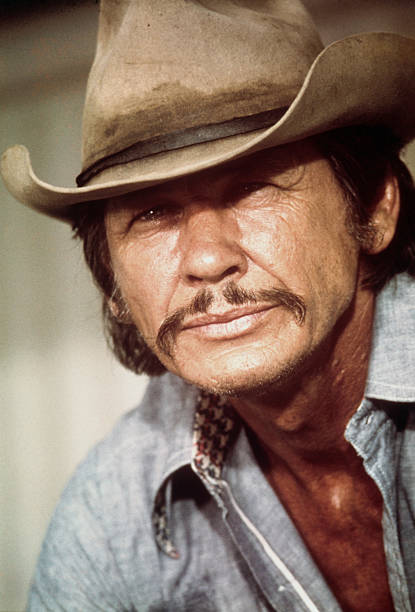
Charles Bronson was born Charles Buchinsky on November 3, 1921, in a coal-mining town in Pennsylvania the eleventh of fifteen children to a Lithuanian father and a Lithuanian American mother. Brought up in poverty, Charles followed his father and older brothers into the coal mines when he was just a teen. Many other laborious jobs followed before he was drafted in 1943. His service earned him the Purple Heart.
Buchinsky had no aspirations to act after his military service, but he took an acting class at the urging of a guy he met at a gym and liked it. After going to see the play “Anna Lucasta” and learning that the actors were making $75 a week, Charles decided to give acting a try. He got his first acting job in television in 1949, soon after he and his first wife Harriet moved to Los Angeles.
Charles Buchinski’s tough appearance quickly got him many parts in movies and television, but nothing made him stand out. There was a string of ne’er do well tough guys and native American roles. In fact, his first credited role as Charles Bronson was in Delmer Daves’s Drum Beat (1954) starring Alan Ladd in which Bronson plays a rebel Native American Chief, a stereotypical role he also played in Westerns directed by Robert Aldrich and Sam Fuller. Buchinski became Bronson in 1954 due to the growing red scare unease and the career limitations his birth name would pose.
“I’m not the boy next door. I don’t look like a cream puff.”
Despite having a contract and garnering many roles, Bronson’s rise to fame was slow. This is especially true in America where audiences mostly ignored him. When Bronson starred in Roger Corman’s Machine-Gun Kelly in 1958, only European moviegoers took note. In the U.S. Bronson had to work on television to pay the bills. He got the leading role in Man With a Camera, an ABC crime series, but it only ran for two seasons (1958-1960).
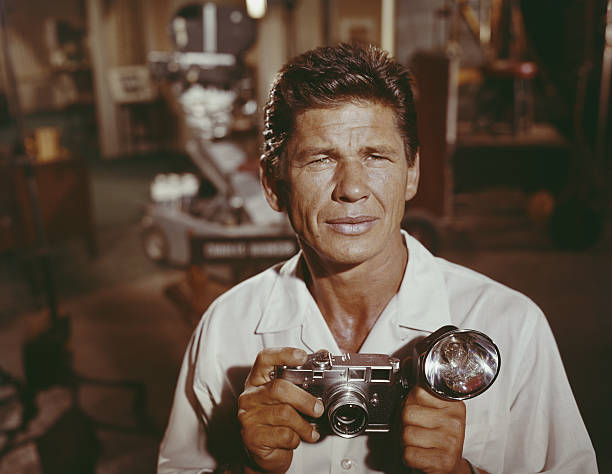
Still a supporting player in the 1960s, but one must admire what Charles Bronson was served that decade, which included three terrific blockbusters: John Sturges’s The Magnificent Seven in 1960 and The Great Escape in 1963, and Robert Aldrich’s The Dirty Dozen in 1967. Great flicks all, but they made stars of other actors.
Charles Bronson met Jill Ireland, with whom he was married for over two decades, during the making of The Great Escape. The story goes Ireland encouraged Charles to make pictures in Europe in hopes he would get starring roles, but he was against thinking that only American stars who failed in Hollywood went to Europe to make movies. That is, until two Italian Westerns made a star of Clint Eastwood in movies Bronson had turned down.
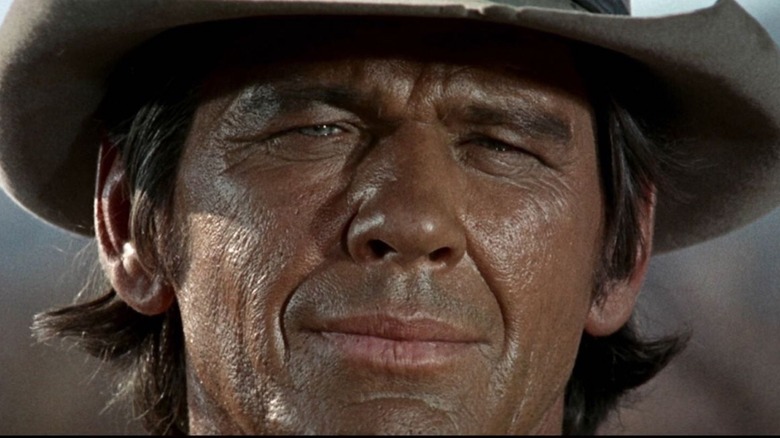
In 1968, Sergio Leoni came calling again. A fan of Bronson’s, Leoni cast him as Harmonica in Once Upon a Time in the West. Leone said he wanted Bronson because he was looking for an actor who could deliver powerful gazes and be convincing as a man who does not worry about eventual death. Perfect for the role, Bronson is memorable as the mysterious hero who plays a harmonica and faces off with Henry Fonda.
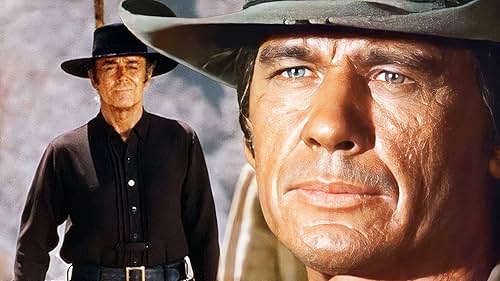
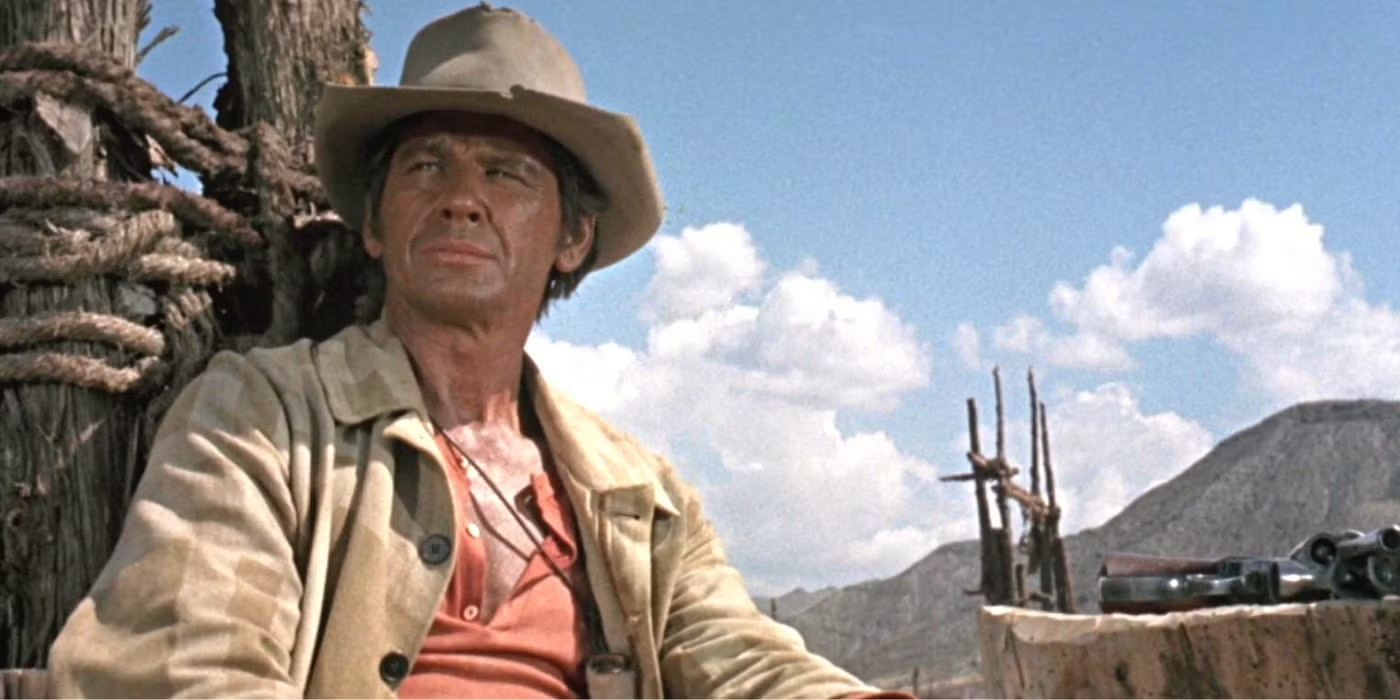
Also in 1968, Charles Bronson made Jean Herman’s Farewell, Friend with Alain Delon, an entertaining and successful heist picture, which along with Leoni’s movie propelled Charles Bronson to super stardom – everywhere but in the U.S. He was so popular in Japan that they paid him millions to star in men’s skin care commercials. It is a sight to see.
In 1970 Bronson delivered an impressive performance in Rider On the Rain stealing the picture from its star, Marlène Jobert. The French thriller was directed by René Clément in 1970 and kicked off Charles Bronson’s most successful decade. Two movies directed by Terence Young should be seen, Red Sun (1971) with Alain Delon, Toshiro Mifune and Ursula Andress, and The Valachi Papers (1972), which features a more dramatic Bronson than most are used to.
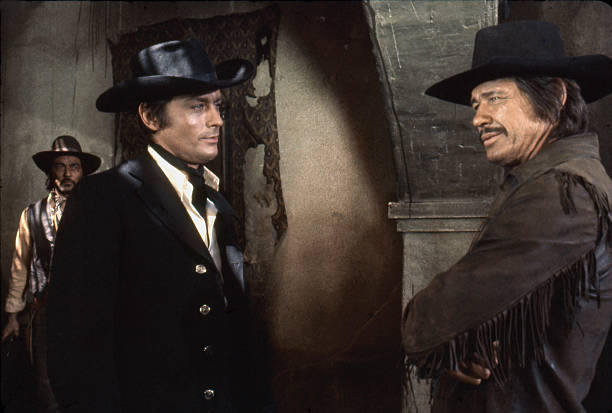
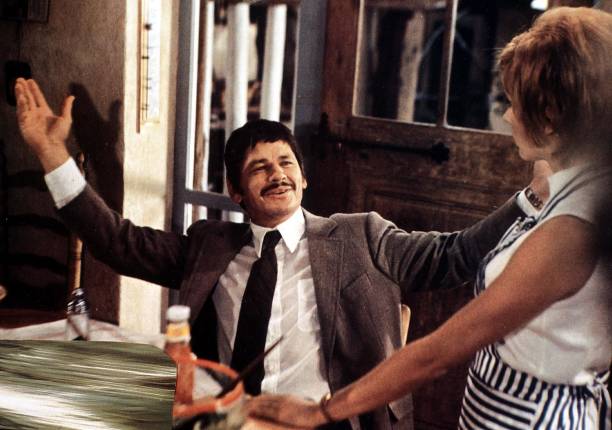
Still, all that work did not convince American audiences of Charles Bronson’s watchability. You must credit Michael Winner’s Death Wish (1974) for that – unfortunately. I prefer Richard Fleischer’s Mr. Majestyk released the same year. Paul Kersey, the accountant-turned-vigilante in the Death Wish movies, is the character most associated with Bronson. In all, Bronson made five Death Wish movies with each being worse than the last.
Charles Bronson died in 2003 at the age of eighty-one. A complicated man said to be ornery behind the scenes, Charles Bronson automatically evokes a certain screen image. That is something not everyone achieves. Still, this fan cannot help but think that it is too bad that he did not get the opportunity to work on better pictures with better directors late in his career. It may have changed his legacy for those who have never seen his movies. Those of us who have know that Charles Bronson had the kind of presence that stays with you long after a movie is done, a man whose wounds seemed deep and lingering. I wish you could have asked my mother who absolutely got what Bronson had to offer. My mother never quite mastered the English language, so it makes sense her favorite American stars said little.
John Huston famously described Charles Bronson as “a hand grenade with the pin pulled.” Huston and Bronson worked together in Tom Gries’s Breakout (1975), one of my favorite Bronson movies in which he plays an unusually lighthearted character hired by Jill Ireland to rescue her husband (Robert Duvall) from a Mexican prison. Huston plays Ireland’s rotten grandfather who is bent on spoiling the rescue. While Breakout is not on TCM’s schedule for the Bronson tribute, I will be watching all day thinking about my mother. If your time is limited, I recommend the prime-time offerings, Terence Young’s Red Sun (1971) and Walter Hill’s Hard Times (1975).
Consider this a steely Bronson-style stare until we meet again.
 Once upon a screen...
Thanks! I missed your blog recs for SUTS this year – so this is appreciated – even though I do enjoy the Death Wish movies… – I thought Bronson was the only good part of The Great Escape – and I love Garner and McQueen!…
Thank you! I missed doing the full SUTS list and have been a little lost without it.
Bronson is one of my favorite parts of The Great Escape as well. He was just fun to watch in general.
A great write up to a wonderful actor.